The Gramophone Accusation
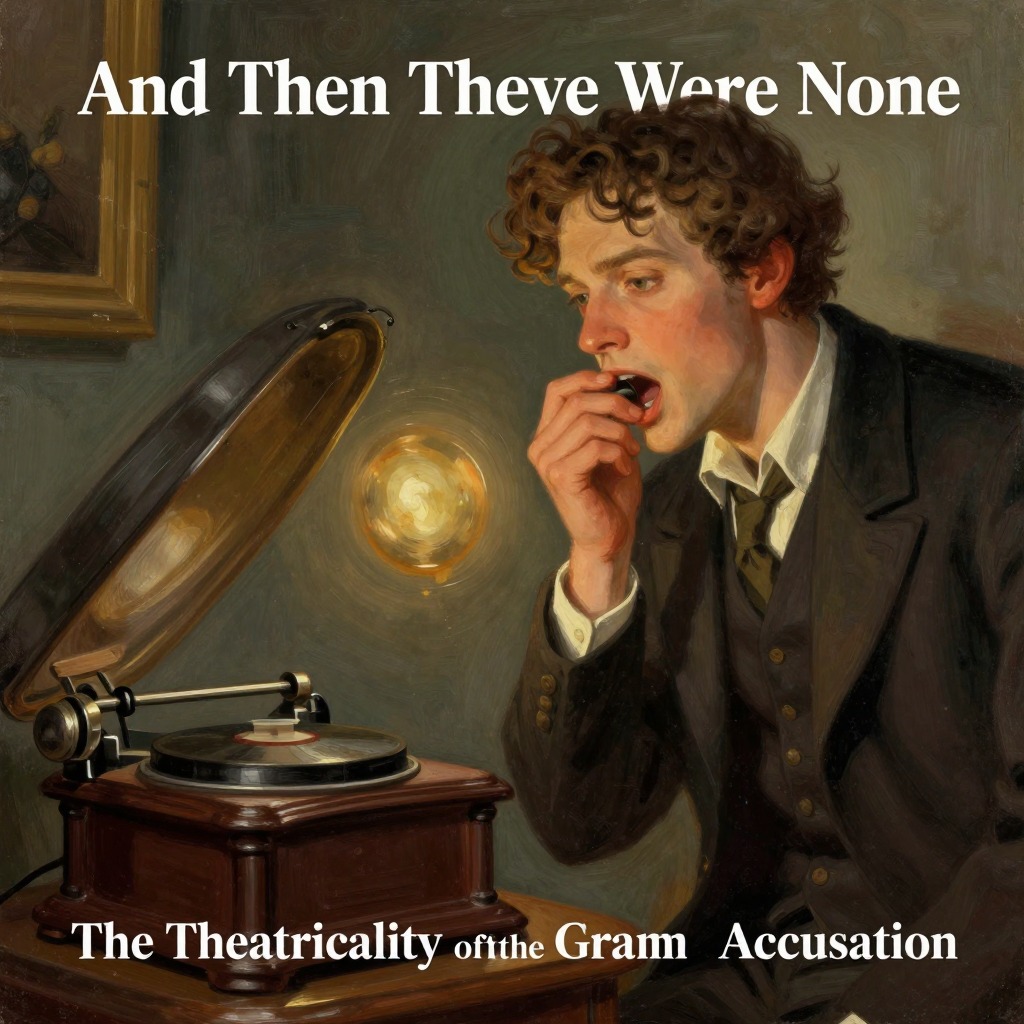
On the evening of August 8th, after a dinner that had relaxed the guests into a comfortable, replete silence, a voice suddenly spoke without warning. It was inhuman, penetrating, and seemed to come from the walls themselves. The voice announced itself with a command for silence and then proceeded to recite a list of indictments, naming each person present and charging them with a specific death. The accusations were precise: Edward George Armstrong was charged with causing the death of Louisa Mary Clees on March 14, 1925; Emily Caroline Brent with the death of Beatrice Taylor on November 5, 1931; William Henry Blore with bringing about the death of James Stephen Landor on October 10, 1928; Vera Elizabeth Claythorne with killing Cyril Ogilvie Hamilton on August 11, 1935; Philip Lombard with the deaths of twenty-one men of an East African tribe in February 1932; John Gordon Macarthur with deliberately sending his wife's lover, Arthur Richmond, to his death on January 4, 1917; Anthony James Marston with the murder of John and Lucy Combes on November 14 of the previous year; Thomas Rogers and Ethel Rogers with causing the death of Jennifer Brady on May 6, 1929; and Lawrence John Wargrave with the murder of Edward Seton on June 10, 1930. The voice concluded with the formal demand, "Prisoners at the bar, have you anything to say in your defence?"
Immediate Aftermath and Discovery
The voice stopped, and for a moment there was a petrified silence. Then Rogers, the butler, dropped the coffee tray with a resounding crash. Simultaneously, a scream and the sound of a thud came from outside the room. Philip Lombard was the first to move, flinging open the door to find Mrs. Rogers lying in a huddled mass on the floor. She had fainted. As Dr. Armstrong attended to her, the others began to demand explanations. The voice had seemed to come from within the room itself. Lombard, searching for its source, discovered a door near the fireplace that led into an adjoining room. Inside, a table had been placed against the wall adjoining the drawing-room, and on it was a gramophone with a large trumpet. The mouth of the trumpet was pressed against the wall, and small holes had been bored through the plaster. When Lombard replaced the needle on the record, the voice began again: "You are charged with the following indictments—" Vera Claythorne cried out for it to be turned off. The record was titled "Swan Song." Rogers explained that he had been following Mr. Owen's orders: he was to put a record on the gramophone, and his wife was to start it when he brought in the coffee tray. He had not known what it contained.
The Unmasking of U. N. Owen
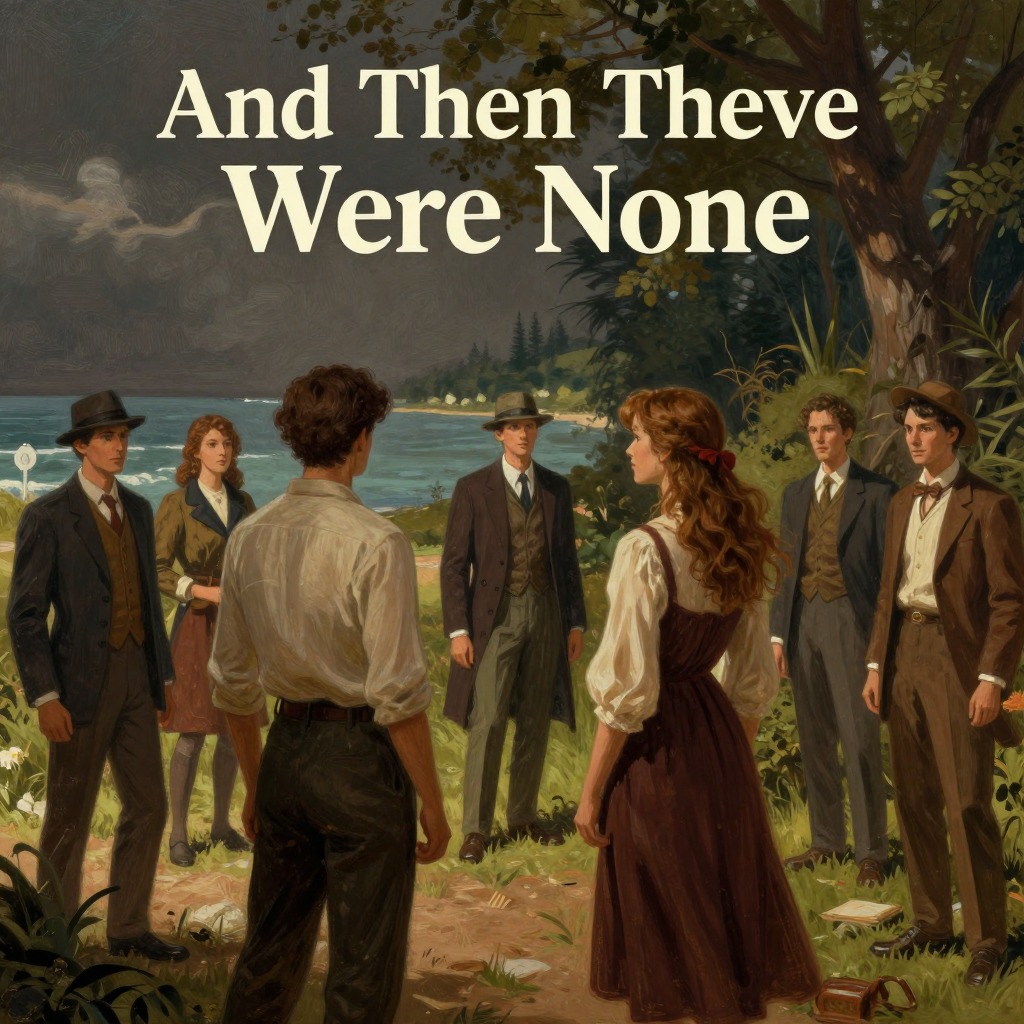
As the guests began to compare their invitations, a pattern emerged. Each had been lured to Indian Island by a letter or telegram that played on a personal connection or professional need. Justice Wargrave had received a letter purportedly from his old friend Constance Culmington. Vera Claythorne had been hired as a secretary through an agency. Emily Brent had been invited as a guest by a woman she believed she had met at a guest house. General Macarthur had received an invitation mentioning old cronies. Dr. Armstrong had been called in professionally with a generous fee. Philip Lombard had been paid a hundred guineas by a man named Isaac Morris to hold himself at the disposal of a client. Anthony Marston had received a wire from a friend named Badger Berkeley. And William Henry Blore, who had introduced himself as Davis from South Africa, was forced to admit he was an ex-C.I.D. man hired by Owen to pose as a guest and watch the others. The judge pointed out that the signatures on the letters—Ulick Norman Owen and Una Nancy Owen—both bore the initials U. N., which could be read as "Unknown." He concluded that they had been invited by a madman, probably a dangerous homicidal lunatic.
The Accusations and Their Truth
The accusations, though delivered by a madman, struck at the heart of each person's hidden guilt. Justice Wargrave insisted that his conscience was clear, that he had merely done his duty in sentencing Edward Seton, a man he was certain was guilty. Yet Dr. Armstrong remembered that the verdict in the Seton case had come as a great surprise, and that there had been comments that the judge had been dead against the prisoner. Vera Claythorne, in a trembling voice, told the story of Cyril Hamilton, the child she had been hired to care for, who had drowned while swimming out to a rock. She had swum after him but could not get there in time; the coroner had exonerated her. General Macarthur, squaring his shoulders, declared that there was no truth in the accusation about Arthur Richmond, that he had merely sent an officer on a reconnaissance in wartime. But in the darkness of his room that night, he would remember the letter in the wrong envelope, the discovery of his wife's affair, and the cold murderous rage that had led him to send Richmond to his death. Philip Lombard, with an amused grin, admitted the story about the natives was true: he had abandoned them to die in the bush, a matter of self-preservation. Anthony Marston, in a slow puzzled voice, recalled running over two children near Cambridge, but dismissed it as a pure accident. Dr. Armstrong, very much master of himself, claimed the name Clees meant nothing to him, but inwardly he remembered the operation performed while drunk, the hands shaking, the patient dead. Emily Brent, when pressed, said only that she had nothing with which to reproach herself. Later, she would tell Vera Claythorne about Beatrice Taylor, the servant girl she had turned out when she became pregnant, who had then drowned herself. The accusations, whether true or not, had exposed the moral failings that the law could not touch.
Thematic Significance
The Gramophone Accusation is the engine that drives the entire plot of And Then There Were None. It transforms a group of strangers into a collection of suspects, each with a secret past, and establishes the central premise: that a self-appointed judge and executioner has gathered them to answer for crimes that have gone unpunished. The event also introduces the nursery rhyme that will dictate the order and manner of the deaths, as the voice's accusations correspond to the first verse: "Ten little Indian boys went out to dine; One choked his little self and then there were nine." The accusation itself is a performative act, a speech act that changes the reality of the island, turning a holiday into a trial and a dinner party into a death sentence. It is the moment when the hidden guilt of each character is brought into the open, and the game of justice—or revenge—begins.